
5S & Lean Organization
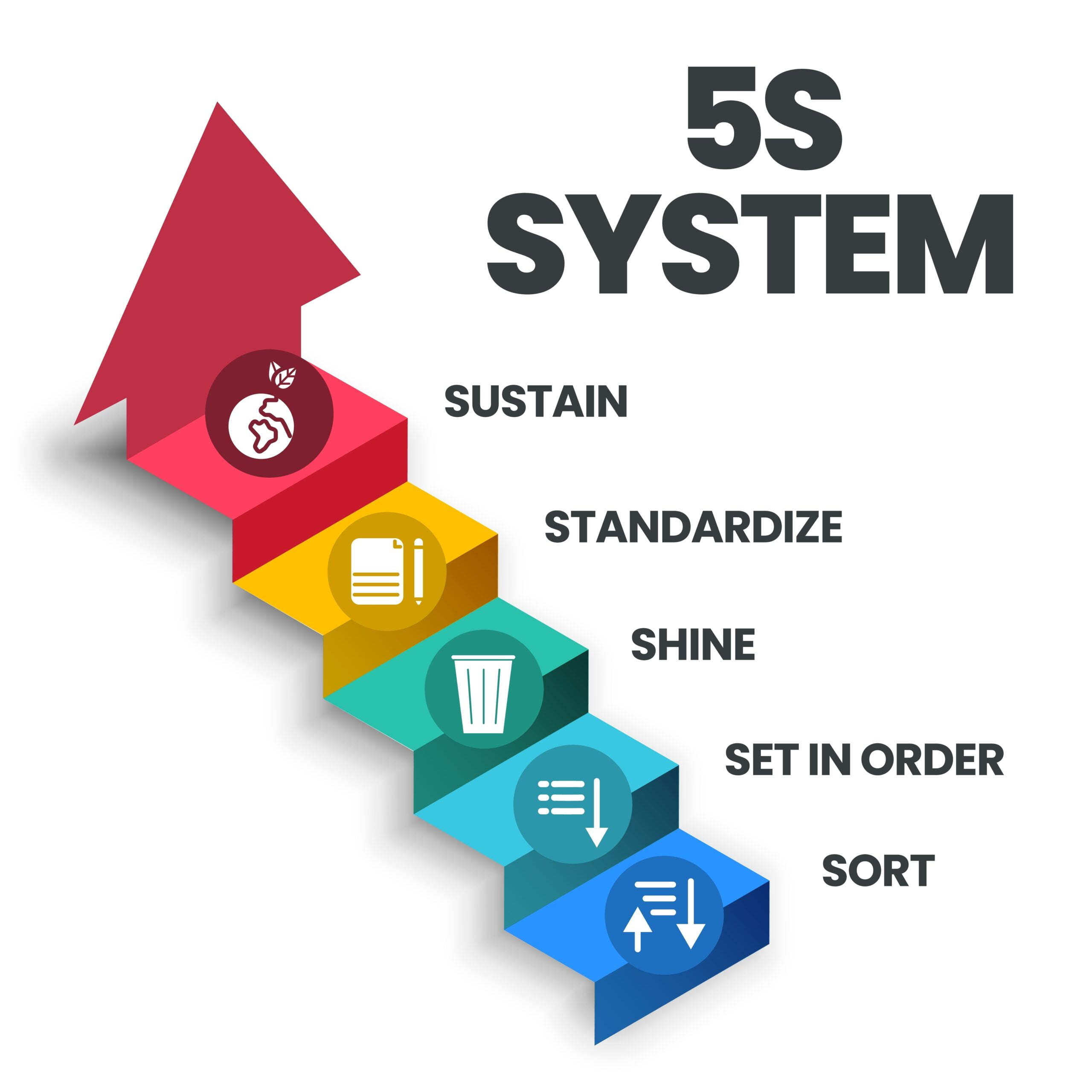
Implementing 5S and lean techniques in the workplace offers significant improvements in overall organization and efficiency. The 5S method, which stands for Sort, Set in order, Shine, Standardize, and Sustain, promotes a structured environment where unnecessary items are removed, tools and materials are properly arranged, and cleanliness is maintained. This approach reduces time wasted searching for equipment or materials, allowing employees to focus on productive tasks. Lean techniques complement this by minimizing waste in all forms—whether it’s time, resources, or effort—leading to more streamlined and efficient processes.
25%-75%
LEAD TIME REDUCTION
40%-70 %
REDUCTION IN SAFETY INCIDENTS
10%-40 %
IMPROVED CUSTOMER SATISFACTION
One of the most noticeable advantages of adopting these techniques is the improvement in employee morale and job satisfaction. A clean, organized, and well-maintained work area reduces frustration and stress among workers. Employees are better able to focus on their tasks without being distracted by clutter or inefficient workflows. Furthermore, the active involvement of employees in maintaining the 5S practices fosters a sense of ownership and responsibility, which can lead to greater engagement and a more positive workplace culture.
PRODUCTIVITY IMPROVEMENT WHEN IMPLEMENTING 5S & LEAN PROGRAMS
5S and lean methods also contribute significantly to workplace safety. A well-organized workspace minimizes the risk of accidents caused by misplaced tools, spills, or blocked pathways. Regular cleaning and maintenance routines ensure that potential hazards are identified and corrected before they lead to injury. Lean techniques promote a culture of continuous improvement, where employees are encouraged to identify and eliminate safety risks, creating a healthier and safer working environment for everyone.
From a business perspective, implementing these techniques can lead to measurable financial benefits. Reduced waste and improved efficiency mean that businesses can produce higher quality products or services with fewer resources and in less time. This not only lowers operational costs but can also increase customer satisfaction through faster delivery times and more consistent quality. Companies that adopt 5S and lean principles often gain a competitive edge by being more responsive and adaptable to market demands.
Lastly, these practices help build a culture of continuous improvement within the organization. By regularly assessing workspaces and processes, employees and management can identify areas for enhancement and make incremental changes that accumulate over time. This proactive mindset prevents stagnation and encourages innovation, ensuring that the company remains agile and prepared to tackle future challenges. The combined effects of increased efficiency, improved morale, enhanced safety, and financial savings make 5S and lean techniques invaluable tools for any forward-thinking workplace.
Work more efficiently by minimizing downtime
Create an intuitive and streamlined work environment
Identify and mitigate risks proactively
Higher Quality
Improve products and service quality

10 benefits of 5S & Lean implementation
Lean encourages continuous improvement (Kaizen) and root cause analysis, which enhances product and service quality. When paired with 5S, which ensures standardization and cleanliness, errors due to poor work conditions or inconsistent processes are significantly reduced. This results in fewer defects and a more reliable product.
By delivering higher quality products and services faster and more reliably, Lean and 5S improve the customer experience. Consistency in output, shorter lead times, and fewer errors contribute to building trust and long-term relationships with clients, which are vital for sustained business success.
Perhaps the most lasting benefit of 5S and Lean is the cultural shift they instill. Rather than settling for the status quo, employees and management alike embrace an ongoing cycle of assessment, feedback, and improvement. This mindset leads to sustainable growth and innovation as the organization becomes more adaptive and proactive.

How Can We Help You ?
Please complete and submit the form.
Hours: Monday-Friday 7:30am-4:30pm
For Faster Service, call us at 800.262.7298